

Navigating Learning Styles in Modern Education
The Spectrum of Understanding

(An Evidence-Based Perspective)
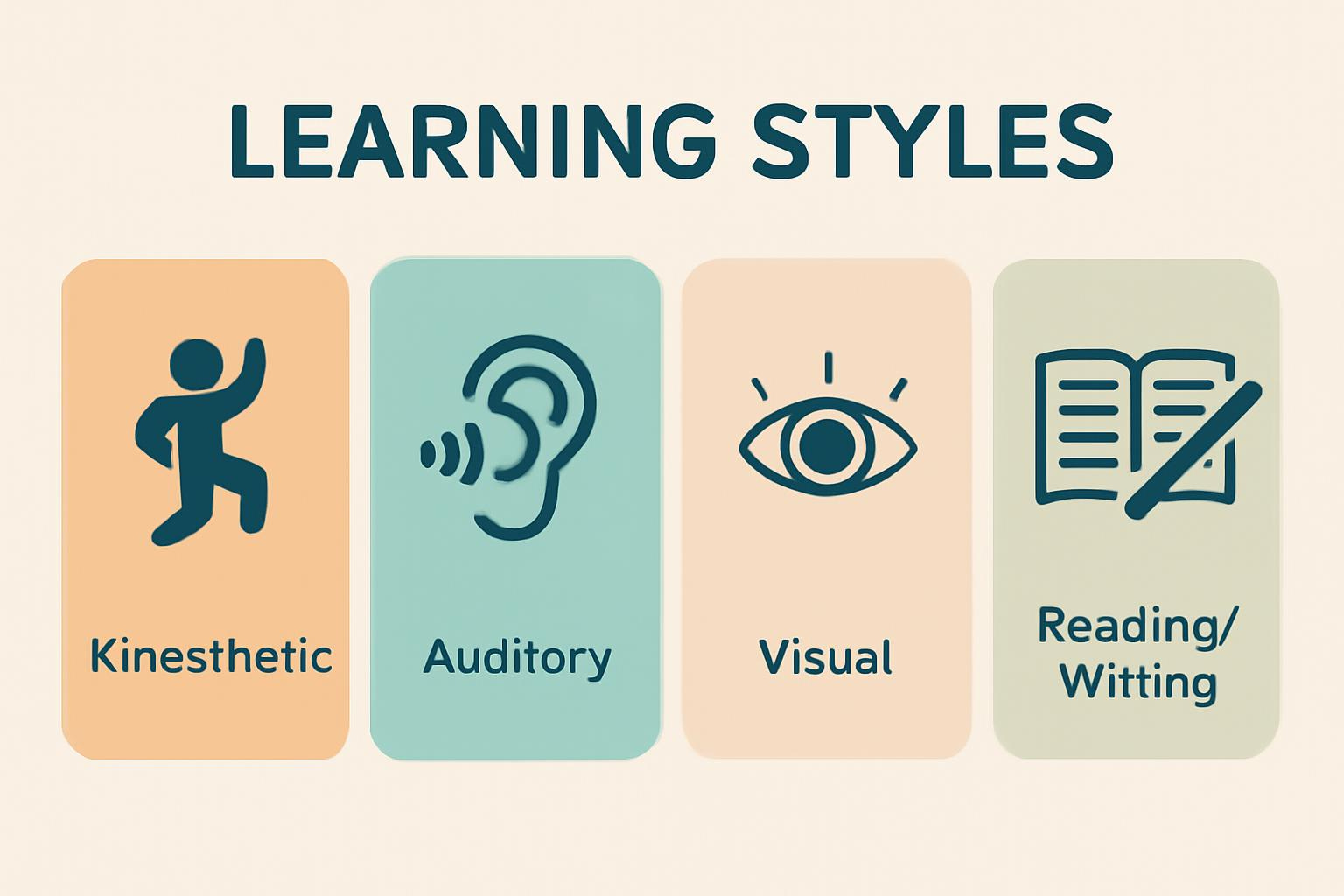
The concept of learning styles continues to shape educational practices despite ongoing academic debate 1 4. Let's examine the current landscape through three critical lenses:
1. Theoretical Foundations
The VARK model (Visual, Auditory, Reading/Writing, Kinesthetic) remains one of the most implemented frameworks, though it exists alongside other theories like Kolb's Experiential Learning and Honey & Mumford's Learning Styles Questionnaire 2. These models collectively suggest that individuals develop preferences for absorbing information - whether through diagrams, discussions, texts, or physical activities 1.
2. Practical Applications
Recent studies indicate 89% of higher education research implicitly or explicitly supports learning style integration 3. Common implementations include:
Visual: Infographics for complex data interpretation
Auditory: Podcast lectures for commuting students
Reading/Writing: Annotated text analysis
Kinesthetic: Lab simulations for engineering concepts
3. Critical Considerations
While the learning styles industry thrives through assessments and training programs 4, researchers caution against strict adherence. The key lies in using styles as enhancements rather than rigid categories 1. Effective educators often blend multiple approaches:
Combining flowcharts (visual) with group discussions (auditory)
Pairing manuals (reading) with hands-on workshops (kinesthetic)
Academic References
Learning Styles Review - Analyzes pedagogical applications 1
Integrative Learning Debate - Compares major theoretical models 2
Learning Styles in Higher Ed - Quantifies academic adoption rates 3
Critical Industry Analysis - Examines commercial aspects 4
This balanced perspective acknowledges both the widespread implementation and academic cautions surrounding learning style theory, emphasizing adaptive rather than prescriptive application.